DVD/Blu Ray Review: The Eagle and the Hawk (1933)
Kino Lorber has released this pre-code World War One drama from Paramount that breezes by in a quick 73 minutes and offers offbeat pre-stardom performances by a couple of Hollywood legends.

Apparently this movie was originally to star Gary Cooper and George Raft, but by the time filming commenced, Fredric March and Cary Grant took on the roles. While March fits comfortably into his strong dramatic portrayal of an ace flyer, Cary Grant's role of a rugged master gunner is quite different than the screen persona he would eventually develop. March and Grant play characters that dislike each other but also have a begrudging respect.
Jack Oakie provides the sort of comic relief he'd already established quite firmly by this time. Less known today than such other World War One dramas as "Wings," "All Quiet on the Western Front," and "The Dawn Patrol," this ranks right alongside such films, offering a solid narrative, good acting, and some impressive action sequences.

March and Oakie play American flyers who join the British Royal Flying Corps and engage in dangerous missions. The film not only presents the physical dangers of war, but also the guilt and mental anguish that goes along with losing comrades during battles. Within the first fifteen minutes of the film, March is responding emotionally to the loss of a gunner, sternly and sadly looking at photos of the man's wife and child in his quarters. Scenes like a commander slowly wiping the man's name from a chalkboard, and a stoic March writing a letter to the survivors are emotionally draining for the viewer. A visual effect of names changing on the chalkboard show five more gunners perishing during the battles. March harbors guilt for each one. There is even a telling scene where another soldier has trouble remembering one of the names of the victims.
It is at this point where Cary Grant re-enters to replace the gunner, having asked to be assigned to the man he dislikes on the surface but still respects. Grant is the harder, more forceful character. March is more subdued and pensive. Their screen relationship works well and they play off of each other effectively. March's sudden punching of Grant (who'd hit him earlier in the movie) is jarring and powerful. March suffering from nightmares, and slowly descending into madness, is brilliantly played, but Grant's reaction, showing a sadness and understanding, is every bit as effective. It beautifully shot in darkness by director Stuart Walker, with shadows enhancing the expressions of the actors.
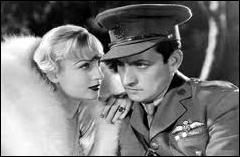
Carole Lombard, a year before fully registering as a brilliant comedy actress in "Twentieth Century," has a more serious role as a woman March gets to know briefly during the course of the narrative. Her part as a sophisticated rich woman is much different than what she would later be noted for, but it is well played and shows her capabilities in the role. Lombard exhibits both a respect and understanding as March explains how flying and shooting was at first a game "like polo" but has become more reproaching.

"The Eagle and The Hawk" blu ray from Kino Lorber looks sharp and beautiful, with sharp visual elements. It continues Kino's consistent releases of find Hollywood classics making their blu ray debut. Among this special features, this disc also features a great commentary track by the always enlightening Lee Gambin.
The blu ray can be ordered here: Eagle/Hawk
Comments